Choosing a natural sapphire starts with what you want: an exceptional gemstone, a particular colour or origin, an unheated stone, a sapphire for a piece of jewellery, or the best balance of beauty and value for your budget.
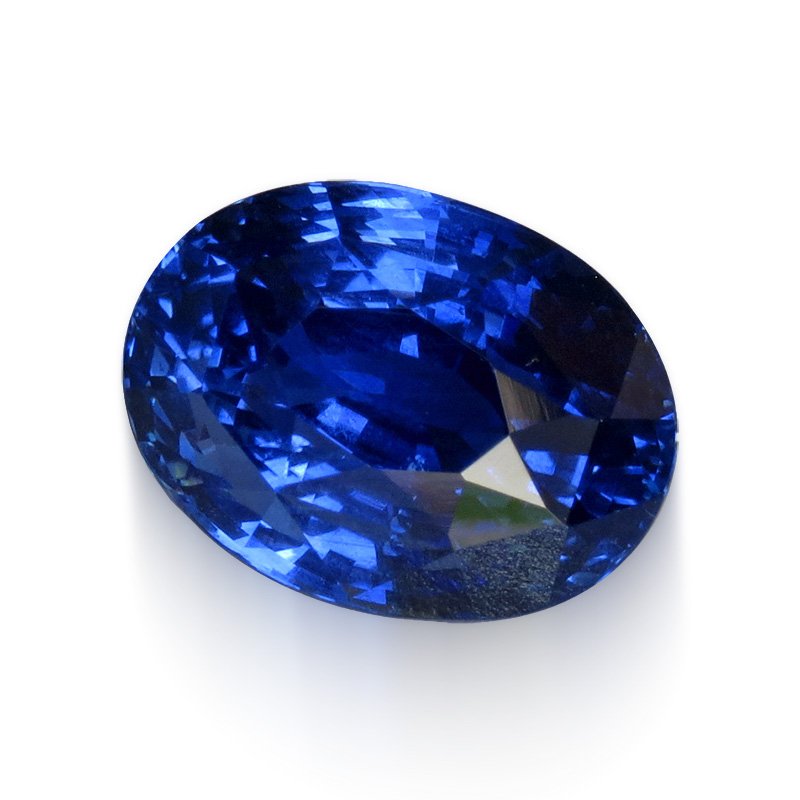
Two natural sapphires can differ greatly in quality. When assessing a fine faceted stone, consider its cut, colour, clarity, transparency and brilliance together. These guidelines concern transparent faceted sapphires; star sapphires and cabochons need a different assessment.
1. Cut: the stone should return light
A good cut does more than give a sapphire an attractive outline. The proportions of its crown, table and pavilion should help light enter the stone and return towards the eye.
Viewed face-up, a well-cut sapphire should look lively. Watch out for:
- A central window through which the background is easily visible.
- Large areas that remain dark as the stone moves, known as extinction.
- An unnecessarily deep pavilion that adds weight without improving the face-up appearance.
Some contrast is normal, and a see-through area appearing only when a stone is tilted is not the same as a persistent face-up window. The aim is not simply to obtain the heaviest stone, but proportions that show its colour and light to advantage.
2. Colour: attractive, balanced and lively
A fine single-colour sapphire generally has an appealing hue, sufficient saturation and a pleasing distribution of colour. If you want a pure blue, consider whether grey or green secondary hues detract from the effect you enjoy.
A blue sapphire should remain attractive in ordinary lighting, rather than looking almost black away from a display lamp. Some people prefer a deep royal blue; others choose a lighter, brighter blue. Trade colour names are not universal grades.
Padparadscha is a special case: its appeal lies in a delicate balance of pink and orange. The criteria used for a pure blue sapphire should not be applied to it unchanged.
3. Clarity: look for an eye-clean appearance
Natural sapphires can contain inclusions. These are part of the stone's history and may provide useful information to a gemologist.
For a fine jewellery stone, I generally look for an eye-clean sapphire: one without distracting inclusions visible to the unaided eye under normal viewing conditions. This does not mean that the stone must be flawless under magnification.
What matters is whether inclusions affect its beauty, transparency or durability.
4. Crystal transparency: distinguish softness from cloudiness
Two sapphires can have almost the same colour and look very different. A transparent crystal can have a crisp, bright appearance, while heavy cloudiness may reduce light return and the sense of depth.
A delicate velvety appearance can nevertheless be desirable. It should not automatically be confused with a strongly milky stone whose transparency is impaired.
5. Brilliance: the combined result
Brilliance is not an isolated attribute. It reflects the interaction of cut, transparency and colour. A good combination produces a sapphire that looks lively as it moves.
Compare it in diffuse daylight and ordinary indoor light. A single photograph, especially under a strong display lamp, cannot show the whole picture.
6. Natural does not necessarily mean unheated
A natural sapphire formed in nature, but it may subsequently have undergone heat treatment. An unheated natural sapphire has not undergone that treatment; laboratory reports usually express this as the absence of observed indications of heating.
Traditional heating is common. A stone with naturally fine colour and transparency, without heating, may be rarer and command a premium. However, an attractive heated sapphire may offer an excellent balance of beauty and budget.
For an important stone, read the independent gemological report and its exact treatment wording. “No indications of heating” should not be expanded into a broader claim that every possible treatment has been ruled out.
7. Compare the report, origin, size and budget
Check the weight and millimetre dimensions together. A deeper stone can weigh more without looking larger from above. An origin opinion can matter to a buyer, but a country name alone does not guarantee quality.
A GIA or Lotus report documents gemological findings; it does not replace judging the stone's appearance or establish a universal selling price. Compare stones with similar colour, treatment, clarity, dimensions and documentation before deciding what represents good value for you.
The best sapphire is the one that suits your priorities
When I assess a fine faceted sapphire, I favour balanced proportions, attractive colour, good light return, few distracting visible inclusions and a transparent crystal. Treatment, origin, shape, size, report and budget then complete the decision.
Use the specialist guides below to explore each point in more detail, then compare the photographs, videos and reports of individual stones.
Choosing a yellow sapphire ring
If you prefer a sapphire already set in jewellery, compare the ring designs too. These three 925 sterling silver models combine a round yellow sapphire with white zircons:
- “Halo d’Or” yellow sapphire ring: a halo of white zircons around the centre stone.
- “Onde Dorée” yellow sapphire ring: a setting with flowing, curved lines.
- “Constellation d’Or” yellow sapphire ring: white zircons arranged along the band.
Visit each product page to see the photos and video, check the offered ring size and confirm current availability.
Explore each criterion
- Heated or unheated sapphire: what is the difference?
- What is a window in a sapphire?
- How to recognise a well-cut sapphire
- Royal Blue and Cornflower Blue: choosing a blue sapphire colour
- Why do some sapphires look milky?
- How to read a GIA or Lotus sapphire report
- Ceylon and Sri Lankan sapphires: what are their characteristics?
- How to assess sapphire clarity
- How much does a natural sapphire cost?
- What is a padparadscha sapphire?
Compare natural sapphires
Explore the sapphire collection. Check each product page for current availability, photographs and documentation.